TinyBK Format
Let me start with something that took me a while to admit.
I have bought a lot of books I never finished. Not bad books. Good ones, by people who knew what they were talking about. They sit on a shelf, about a fifth read, and every time I look at them I feel a small, specific guilt.
For years I assumed that was a discipline problem. It isn't. It's a format problem, and once you see it properly you can't unsee it.
Nobody has an information problem anymore
Ten years ago, if you wanted to understand something, the hard part was finding a good explanation. That's over. You have an AI in your pocket that will explain almost anything, at any depth, in four seconds, for free.
So the scarce thing is no longer the information. If anything we have the opposite problem now. There's more good material available than any of us can read in a lifetime, which means the bottleneck has quietly moved from finding to finishing, and from finishing to actually doing something with it.
That's a completely different problem, and the 220 page book was not designed to solve it.
What industry trends are teaching
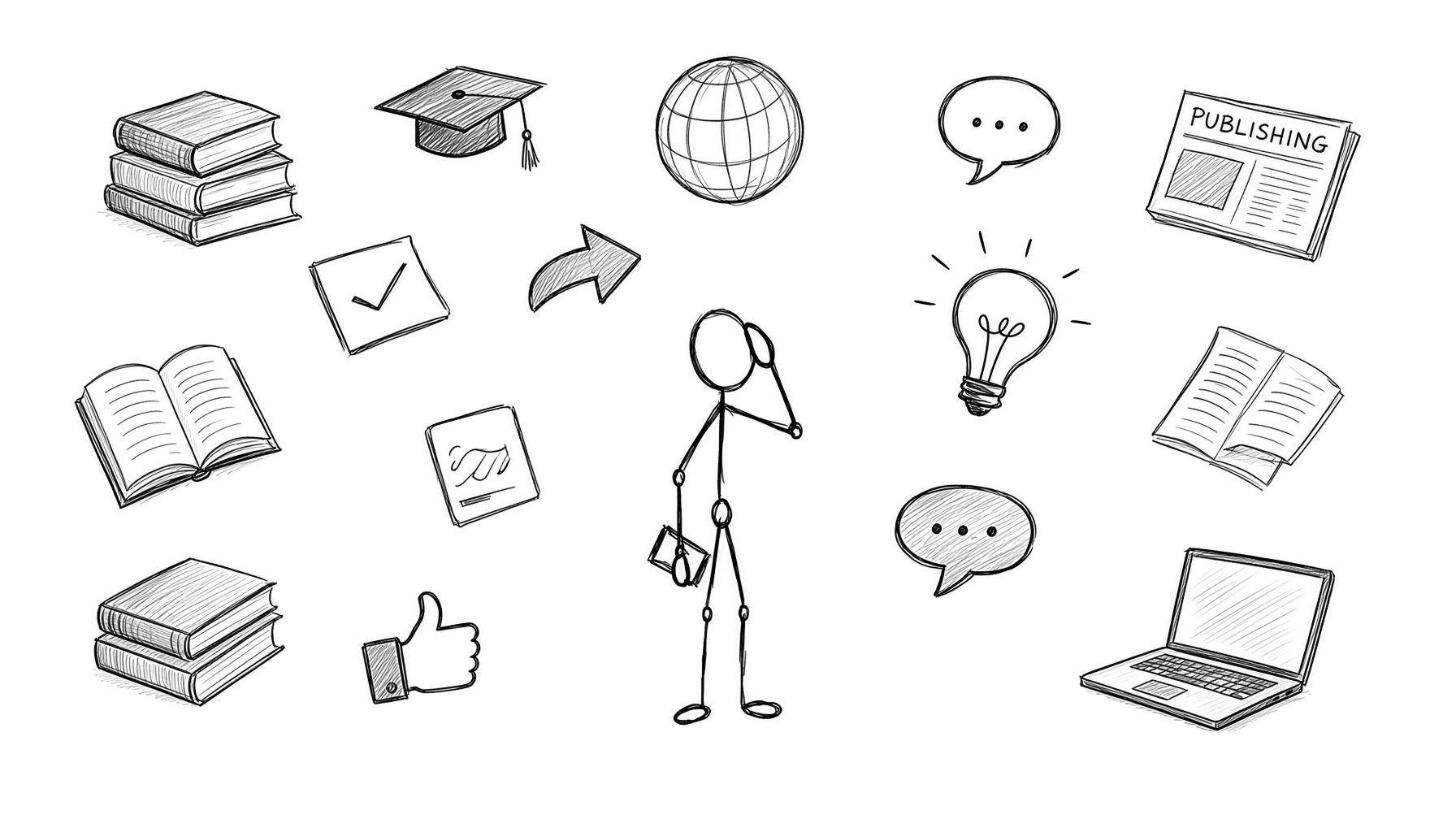
One. Millions of people pay money every year to not read books. Blinkist alone has around 30 million users and did roughly $50 million in revenue before Go1 acquired it in 2023. getAbstract has been doing this since the nineties and has over 27,000 summaries. Whole businesses exist purely to give you the book without the book.
Two. Short form ate everything. The average person now watches over 80 minutes of short form video a day. Instagram Reels account for half of all time spent on Instagram. TikTok videos under 30 seconds finish 72% of the time, and the ones between 30 and 60 seconds finish 54%. Length is punished, hard, everywhere except in the publishing industry.
Three. Training businesses that provide corporate training have figured this out. The microlearning platform market was around $3.1 billion in 2025 and is forecast to roughly triple by the mid 2030s. Companies with actual money on the line stopped running day long courses and started shipping small, repeated modules that fit inside a working day and successfully educate and train their people with tiny, segmented and multi-model training programs.
Three separate signals, all pointing in the same direction: let there be a shorter, complete, and better version of the full-length book. We have the rationale - and the building blocks - to make it happen.
But here's where most people draw the wrong conclusion
The obvious read is "people want less, so make books shorter." I thought that too for a while, and I now think it's wrong in a way that matters.
Look at what the summary industry actually proves. Not that short books are better. It proves that a huge number of people have decided a 300 page book isn't worth 300 pages of their life, and would rather have someone else's compression of it. That's a damning fact about the format, not a compliment to summaries.
And summaries have a real problem. They hand you the what and drop the why and the how. There's no space to think, nothing asks you anything, and you close the app having felt productive without having changed anything. The learning research is not kind to that model, and the critics of Blinkist use exactly the same studies I'm about to cite.
Same with short form video. I'm not pointing at TikTok and saying books should be more like TikTok. Short form video won because it respects a constraint that publishing pretends doesn't exist. That's the lesson. The lesson is not to copy the thing.
So a TinyBK is not a summary, and it is not a book chopped up for the feed.
It's a book that never needed to be 300 pages in the first place.
Which raises a fair question. Why are books that long?
Mostly because of shelves. A publisher needed enough pages to justify a price point and a spine you could see in a shop. That was a distribution constraint, and it's been dead for about fifteen years. Most of what sits between the good ideas in a business book is scaffolding for a business model that no longer exists.
What the research actually says
This is the part I care about most, because I don't want you to agree with me for vibes. Here are five things that are either well replicated findings or clearly declared values. You can argue I've applied them badly. You can't really argue with the things themselves.
1. The bottleneck is working memory, not time. Cognitive load theory says learning falls apart when a single session carries more than the mind can hold at once. So the principle isn't short. It's singular. One idea per book. Short is just what happens as a result.
2. Retention comes from spacing, not from exposure. Cepeda and colleagues reviewed 839 assessments across 317 experiments and found the same thing every time: material revisited across gaps beats material crammed together, and the ideal gap gets longer the longer you need to remember. So a book read in one go is a great way to encode_something and a poor way to _keep it. You need a place to come back to. That's what the Booksite is.
3. Being asked beats being told. This is the testing effect and the generation effect, and it's one of the most robust results in learning science. Producing an answer yourself, even badly, beats being handed one. Which means the questions in a book are not decoration. They're the load bearing bit.
4. Knowledge does not become behaviour on its own. Pfeffer and Sutton called this the knowing doing gap back in 2000, and it's why so much reading and training produces so little change in what anyone does. The good news is we know what closes it. Gollwitzer and Sheeran's meta analysis found that if-then plans ("when X happens, I will do Y") moved behaviour with an effect size of d = 0.65, across 94 studies and more than 8,000 people. Vague intentions did almost nothing. Specific triggers did a lot.
5. Knowledge that gets used is the knowledge worth having. This last one is a value, not a finding, and I'd rather say so plainly than dress it up. There's an old prayer I keep coming back to: seek knowledge that benefits, and take refuge from knowledge that doesn't. Knowledge that sits in your head and never reaches your hands cost you the time either way.
4 things books do for you
Now let me be a bit precise abut the ask - what do we ask a book to do anyway? Here's what I've found, we burden the book to do a fe things :
See. You notice something you didn't notice before.
Think. You have a better model for making sense of it.
Decide. You can tell which of two options is better.
Do. You act differently.
Most books are brilliant at the first two and hand you the last two as homework. Go figure it out yourself. There's no structure built to help you return to it, nothing that tracks whether you actually did the thing. You close the book seeing more clearly, and what happens next, how much sticks, whether you use any of it, is entirely up to you. The standard book fires you out of a cannon and never looks to see where you landed.
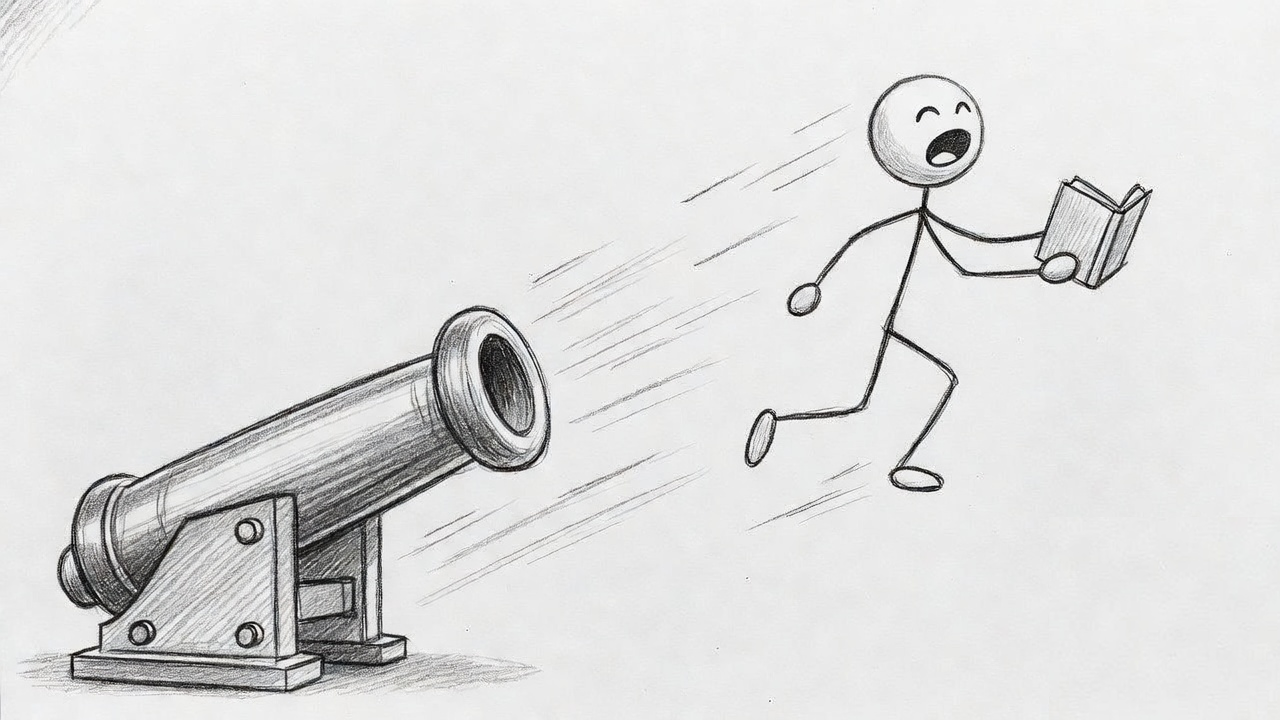
That gap is the whole reason this format exists.
So, what is a TinyBK?
A complete book with a narrow scope, built so you learn it in more than one way, and finish it having done something - by design.
TinyBK is complete in its own right. It's not an extract, not an abridgement, not a taste of a bigger thing you're meant to buy later. Nothing was cut, because nothing was padded to inflate the pages.
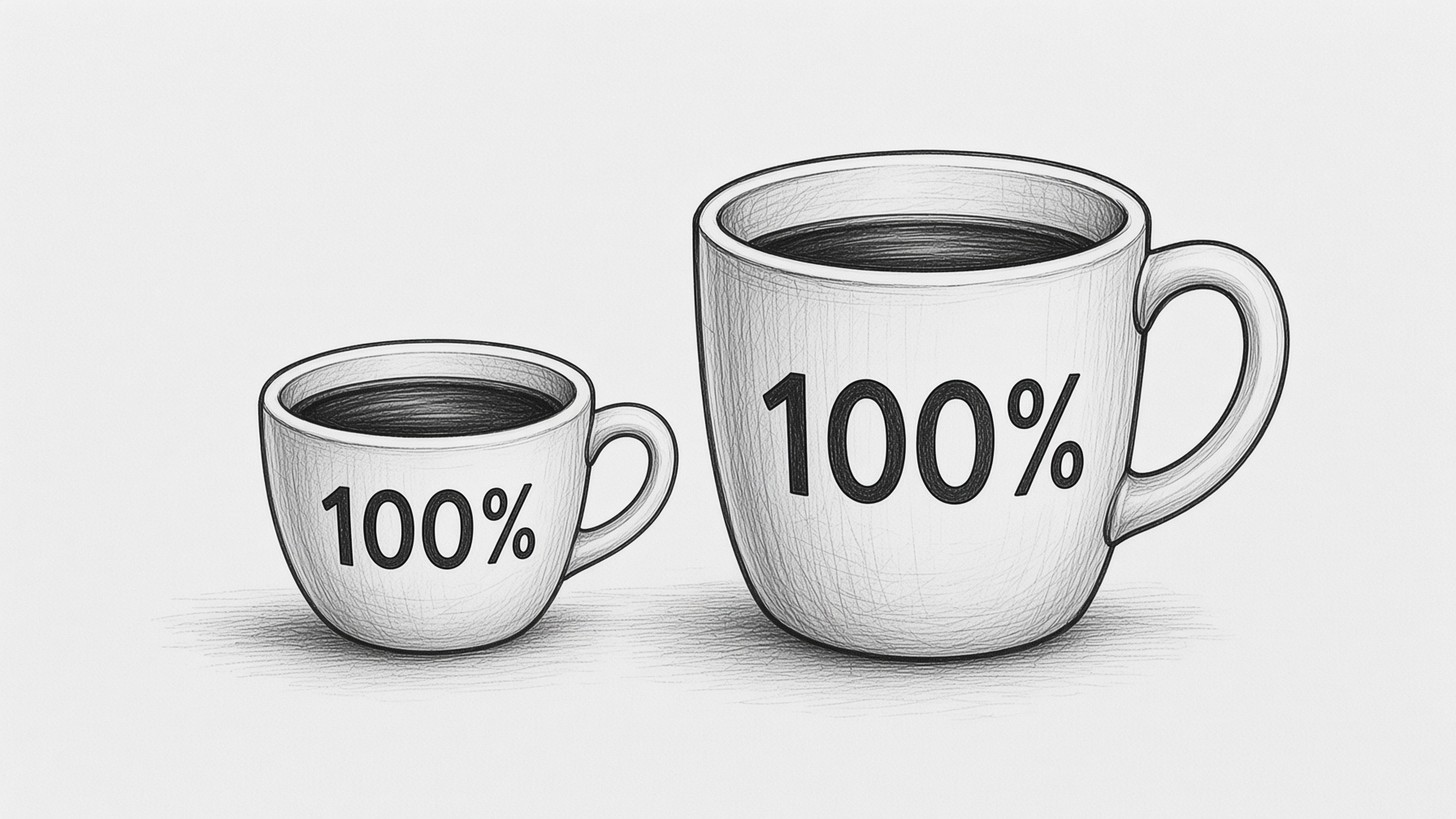
Tiny BK is laser-focused, offers one idea, teaches it properly and beats ten ideas half learned, half retained or forgotten. Its the Piccolo of coffee that has the full-shot and gives of 100% of coffee without filling your stomach - but its actually more than that - it drives change and help you act differently.
And one clarification on "teaching more than one way", because this bit is easy to get wrong. The research does not say to deliver the same content in two channels at once. It says the opposite. Mayer's redundancy principle found that identical information presented simultaneously in two formats actually reduces learning, because your working memory burns capacity reconciling them. What works is the same idea met again, later, in a different form. Read it. Try it on your own situation. Come back a fortnight later and see how someone else applied it. Different encounters, spread across time. So when people should collaborate, it's more on the application side of the book than the knowledge side.
Here's what I have put together, a manifesto inviting contribution from the people who know.
The manifesto
Complete, not condensed. A TinyBK is whole at its size. If it feels like an extract, it failed.
Reconnects companion site. Brings the reader to a companion site, multi-mode learning space
Asks, as well as tells. Enable users to produce clarity instead of just receiving.
Includes self-assessments. Every chapter puts a question to you that you have to answer yourself.
Ends with a plan of action. You leave with one specific thing you'll do, and when.
Invites collaboration on action. What you did with the idea becomes part of what the next reader sees.
An honest admission, and an invitation
I don't think I have the final shape of this.
I've got the observations, the research, and a format that follows from both. What I don't have is a hundred authors and a few thousand readers telling me which parts survive contact with reality. That's not false modesty, it's just where things are.
So this manifesto is a draft, deliberately. If you write, teach, consult, or have spent years accumulating something worth passing on, I'd like your name on the version of this that comes next.
Two specific things I'd want from you:
Take one idea you'd normally bury inside a 200 page book and try shipping it as a TinyBK.
Tell me which of the seven points above broke when you tried.
The second one is worth more to me than the first.
References
Cepeda, N. J., Pashler, H., Vul, E., Wixted, J. T., & Rohrer, D. (2006). Distributed practice in verbal recall tasks: A review and quantitative synthesis. Psychological Bulletin.
Bjork, R. A. & Bjork, E. L. Desirable difficulties: spacing, interleaving, retrieval practice, generation, varied practice.
Mayer, R. E. The redundancy principle in multimedia learning. Cambridge Handbook of Multimedia Learning.
Gollwitzer, P. M. & Sheeran, P. (2006). Implementation intentions and goal achievement: a meta-analysis of effects and processes.
Pfeffer, J. & Sutton, R. I. (2000). The Knowing-Doing Gap. Harvard Business School Press.
Sweller, J. Cognitive load theory. See also Miller's pyramid of clinical competencefor the competence sequence.
Ryle, G. (1949). Knowing how and knowing that. Stanford Encyclopedia of Philosophy.
Go1 acquires Blinkist, Sifted, 2023. Blinkist revenue and user figures via Tracxn.
Microlearning platform market size and forecast, Fortune Business Insights.
Short-form video statistics 2026, Kapwing.
Mark, G. Attention Span. Research on screen attention averaging 47 seconds.